Jasper National Park is one of the best places on the continent for wildlife watching. According to Parks Canada, the park protects 53 species of mammals across 11,228 square kilometres of mountain wilderness. On any given morning you can see elk grazing beside the road, bighorn sheep picking their way down a cliff face, and a grizzly bear turning over rocks in a distant meadow. We have been running trips on the Athabasca River since 1971, and the wildlife we see from the water every season still stops us mid-sentence. This guide gives you the locations, the timing, the safety rules, and a few things you can only see from a raft.
The Five Species Every Visitor Wants to Find

Jasper wildlife watching centres on five flagship species. Each has its own habitat, its own season, and its own set of safety considerations for families.
Elk
With a population of more than 1,300 individuals, according to bookjasper.ca, elk are the animal you are most likely to see on any visit. They graze in open meadows at dawn and dusk, and bulls grow antlers that span well over a metre. Elk are calm and photogenic for most of the year, but the rut in late August through mid-October changes them completely. During the rut, bull elk gather harems and will charge anything that comes between them and their cows, including people. Parks Canada requires a minimum distance of 30 metres from all elk at all times, and the Jasper elk rut prompts an annual public warning from park managers. Keep children behind you, never approach a bugling bull, and do not position yourself between a bull and the females he is watching.
Grizzly Bear
Roughly 100 to 120 grizzly bears live in Jasper National Park, making it one of the strongest populations in the Canadian Rockies. Grizzlies are most visible in spring when they emerge from dens and forage in avalanche slopes and open meadows, and again in late summer when they feed intensively before hibernation. Parks Canada requires visitors to remain at least 100 metres from bears, cougars, and wolves at all times. That is the length of a full city block. Carry bear spray on every outing, keep it accessible rather than packed away, and make noise on trails so you do not surprise an animal at close range.
Black Bear
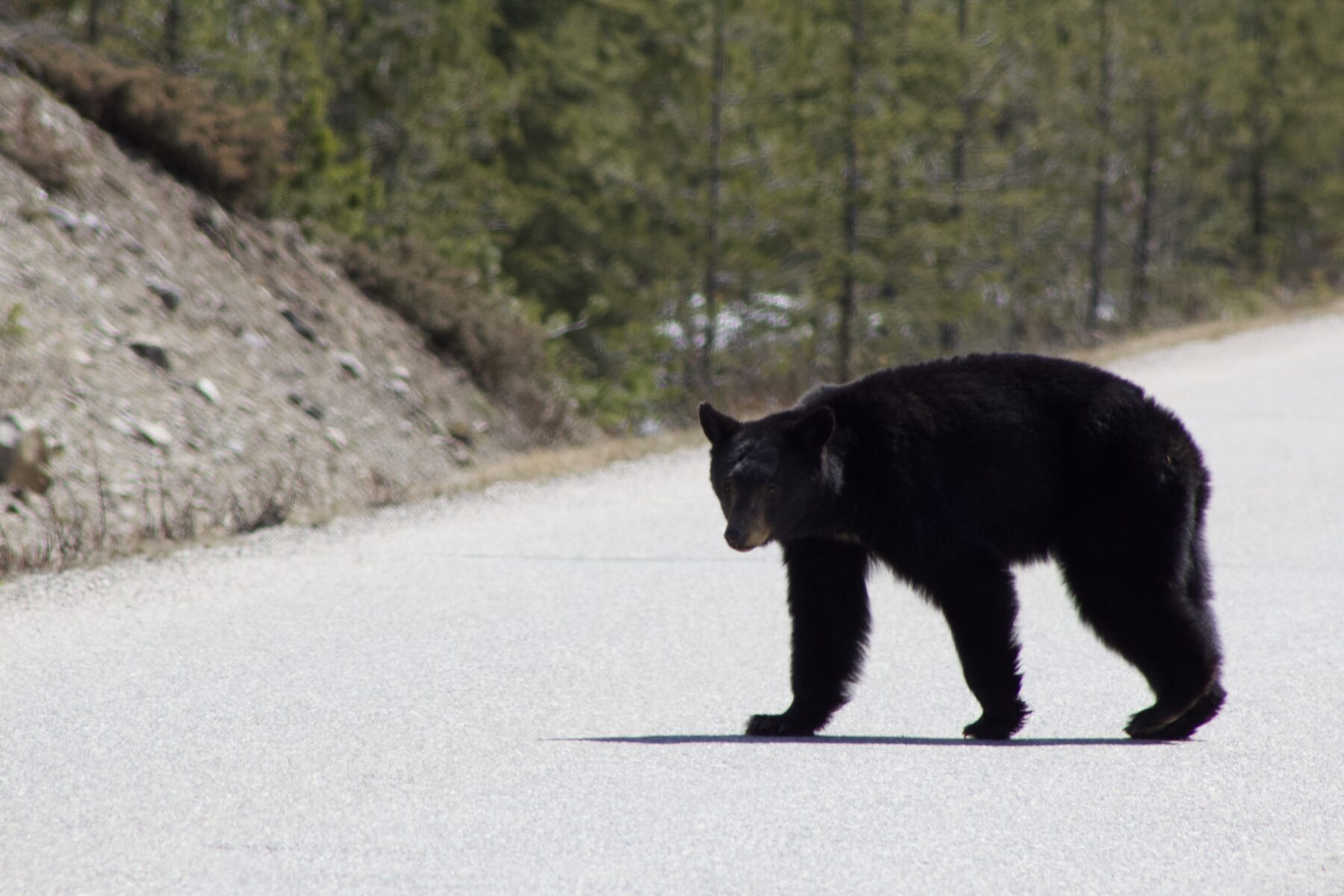
Black bears are more numerous than grizzlies in the park and appear throughout the forested valley floors from spring to fall. They are frequently spotted along Pyramid Lake Road and the early section of Highway 93 south of Jasper. Black bears are generally more tolerant of human presence than grizzlies, but that tolerance is exactly what makes them dangerous around families. Never feed a black bear and never let children run toward one. The same 100-metre rule applies. A bear that has learned to associate people with food is eventually a bear that has to be destroyed, as Parks Canada notes in its wildlife guidelines.
Moose
With only about 150 individuals in the entire park, moose are the rarest of Jasper’s big five, which makes a sighting genuinely special. They favour wetland edges, beaver ponds, and slow river backwaters where they can wade in to eat aquatic vegetation. Maligne Lake, Medicine Lake, and the marshy flats along the upper Athabasca are your best bets. Moose are deceptively fast and can be aggressive, particularly cows with calves. Maintain that 30-metre minimum and watch for the flattened ears and raised hackles that signal a warning charge.
Bighorn Sheep
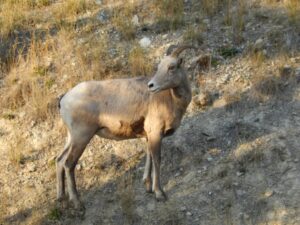
Bighorn sheep congregate on mineral licks and rocky slopes near Disaster Point, along the road to the Overlander, and near Miette Hot Springs. Rams are most dramatic in November and early December when they clash with spectacular horn-to-horn collisions during the rut. Bighorn sheep are relatively relaxed around vehicles, so a slow drive along Highway 16 east of Jasper often produces close-range views without any hiking required.
The Best Locations for Jasper Wildlife Watching

Location matters more than luck. The same corridors produce consistent sightings season after season because they offer the water, minerals, and shelter that animals need.
Maligne Lake Road
Tourism Jasper calls Maligne Lake Road the single best corridor for wildlife diversity in the entire park. The road runs northeast from Jasper townsite through a mix of wetlands, conifer forest, and open meadows that attract every large mammal the park supports. Drive it slowly in the first two hours after sunrise or the last two hours before sunset. Pull off at the Medicine Lake viewpoints for moose, scan the meadows near the Maligne River bridge for bears, and watch the forest edges for elk throughout. This is also where guided wildlife tour vehicles focus their evening circuits.
Pyramid Lake Road
Pyramid Lake Road, which climbs the benchlands northwest of town, is the most reliable corridor for elk in the Jasper townsite area. It is also where bears are routinely spotted foraging along the roadside. The road is short enough to drive slowly in both directions and still be back in town for breakfast. Early morning in May and June, when bears have just emerged and are feeding heavily, is the most productive time.
Highway 16 East: Disaster Point to Miette
The stretch of Highway 16 running east from Jasper toward the park gate is classic bighorn sheep country. Disaster Point is a mineral lick that sheep have visited for generations, and it is common to find a dozen or more animals there on a single stop. The road to Miette Hot Springs branches off this highway and passes through terrain where elk and deer are regularly seen in the evening.
The Icefields Parkway (Highway 93)
The southern reach of the Icefields Parkway, from Jasper townsite down to the Columbia Icefield, passes through prime bear and wolf territory. The Goats and Glaciers Lookout is one of the best spots in the Rockies for mountain goat viewing. Wolves are seen here occasionally, usually early or late in the day when traffic is lightest. If you are combining a drive with a broader Jasper itinerary, the Parkway rewards anyone who drives it at the edges of the day rather than midday.
From the Athabasca River
We save this for its own section below because it deserves it. For now, know that the river corridor is a genuine wildlife watching destination in its own right, not just a place where you might happen to see an animal in the background.
Best Times of Day and Year for Sightings

Timing is the single biggest variable in jasper wildlife watching. Most large mammals are active during what photographers call the golden hours.
- Dawn to mid-morning: The most productive window of the entire day. Animals that fed through the night are still active. Light is soft and directional. Bears, elk, and moose are all more visible before the heat of the day pushes them into forest shade.
- Late afternoon to dusk: The second-best window. Temperatures drop, animals begin moving again, and elk start to bugle from late August onward.
- Midday: The quietest time. Most large mammals are bedded in forest cover. This is a better time for birdwatching or visiting high-elevation spots where raptors ride thermals.
Seasonally, spring and fall are the champions:
- May and June: Bears emerge from dens thin and hungry, and are highly visible on open slopes. Elk calves are born in late May and June, keeping cows and calves in meadows. Waterfowl and migratory songbirds fill the wetlands.
- July and August: Wildlife is present but more spread out across higher elevations. Early mornings are still productive. The upper Athabasca valley is beautiful and uncrowded compared to the shoulder seasons.
- September and October: The elk rut transforms the townsite and valley floors. Bull elk bugle, spar, and gather harems in full view of visitors. Bears are in hyperphagia, eating constantly to build fat reserves before denning. Wolf activity often increases as predators follow the elk. This is the single best month for the sheer drama of wildlife behaviour.
- November through April: Bighorn sheep and mountain goats remain active at lower elevations. Wolf tracks appear in fresh snow. This is a quieter but rewarding time for visitors who want sightings without the summer crowds.
Wildlife Safety With Kids: What Every Family Needs to Know
Jasper is an extraordinarily safe place to bring children, provided families understand a few non-negotiable rules before they arrive. The wildlife here is genuinely wild, and the park’s animals are not afraid of people the way animals in urban settings learn to be.
Bear Safety for Families
- Carry bear spray on every hike, every time. Store it in an accessible hip holster, not buried in a backpack. Adults should know how to deploy it before you leave the trailhead.
- Make consistent noise on trails. Talk, clap, call out “hey bear” around blind corners and in dense vegetation. Sudden, silent encounters at close range are the scenario to avoid.
- Parks Canada requires 100 metres between you and any bear, cougar, or wolf. If a bear is within that distance, hold your ground, keep children directly behind you, and back away slowly while speaking in a calm, firm voice.
- Never run. Running triggers the chase instinct in predators. Children should practise walking calmly beside an adult rather than running ahead on trails.
- Store all food, snacks, and scented items in a locked vehicle or bear locker. This applies to the car seat snacks and the granola bars in the diaper bag as much as it does to camp food.
Elk Rut Safety for Families
The elk rut catches visitors off guard every year because the same elk that browsed calmly outside a coffee shop in August will charge a stroller in September. Parks Canada issues annual public warnings about rut-season elk behaviour for exactly this reason.
- Stay at least 30 metres from all elk, including cows, from late August through mid-October.
- If a bull is bugling, it is actively advertising its aggression. Give it a very wide berth and keep children on the side of you that is farthest from the animal.
- Never position yourself between a bull and the cows he is watching. He will interpret that as a challenge.
- Jasper townsite itself can have elk on the streets and in the parks during rut season. This is exciting to see from a distance, but keep children from running toward them regardless of how calm the animal appears.
- If an elk lowers its head, lays its ears back, or begins walking toward you, move behind a vehicle, a large tree, or a solid structure immediately.
We also have a full breakdown of family-friendly activities in the park in our guide to the best things to do in Jasper with kids, including other outdoor experiences that are safe and appropriate for young travellers.
What You See From the Water That You Miss From the Road

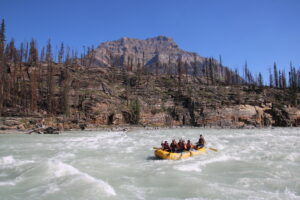
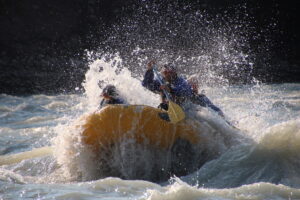
We have been on the Athabasca River since 1971, and we will tell you something that road-bound visitors almost never hear: the river is one of the best wildlife watching platforms in the park, and most people drive right past it.
Here is why it works. Some animals that are accustomed to vehicles on a highway have learned to move away from roads when human traffic increases. But the river is not a road. A raft gliding downstream makes almost no noise and carries no engine smell. Animals at the water’s edge do not associate a raft with a threat the way they do with a vehicle door slamming. We routinely drift within a natural viewing distance of elk coming to drink at dawn, ospreys and bald eagles hunting, and deer browsing the willow banks.
Bears in sometimes use the river corridor heavily in late summer when they are feeding intensively before hibernation.
Elk gather in the valley bottom beside the Athabasca during the rut in September. Watching a bull with a full rack bugling from a gravel bar, from the quiet perspective of a raft on the water, is one of those wildlife moments that does not happen any other way. Guides who have worked this river for years know which bends and which banks produce sightings, and they share that knowledge on every trip.
Ospreys and bald eagles nest along the river corridor throughout the summer, and moose are periodically seen wading in the slower side channels. The Athabasca is not just a rafting experience. It is a wildlife corridor that the park’s animals use constantly, and it is one of the few places in Jasper where you approach wildlife on their terms rather than yours.
If you want to experience this for yourself, our trips on the Athabasca run from late spring through the fall. You can see our Athabasca Mile 5 trip here or call us at (780) 852-7238. We have been doing this for over fifty years, and the river still surprises us.
Photography Tips for Families
Great wildlife photographs do not require expensive equipment. They require patience, the right time of day, and an understanding of animal behaviour. Here is what works for families visiting Jasper.
- Use your vehicle as a blind. Many of Jasper’s most co-operative wildlife sightings happen from cars because animals have grown accustomed to slow-moving vehicles. Turn off the engine, lower the window slowly, and wait. An elk or bighorn sheep that would walk away from a person standing on the roadside will often stay relaxed while you photograph from the car.
- Shoot at the golden hours. Midday light is flat and harsh. The warm, angled light at dawn and dusk makes fur and feathers glow in a way that no editing app can recreate. Wake up early on at least one morning of your trip.
- Fill the frame with the animal, not the landscape. On a phone camera, this means getting as close as the legal distance allows, which with elk and sheep is 30 metres. Use the optical zoom on your phone rather than digital zoom, which degrades image quality.
- Capture behaviour, not just presence. A bull elk bugling, a grizzly digging, or a bighorn ram raising its head to test the wind makes a far more compelling image than a stationary animal staring at the camera. Wait for a moment of movement or interaction.
- Involve the kids. Give children a simple assignment such as finding one bird, one large mammal, and one track or sign. It sharpens observation skills and keeps young travellers engaged during slow periods between sightings.
- Bring binoculars. A pair of binoculars transforms distant shapes in a meadow into identifiable animals. Children love them, and they also help you confirm a sighting before committing to a closer approach.
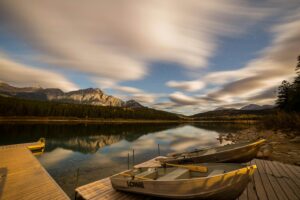
The scenic beauty of the park extends well beyond its wildlife. If photography is a priority, our guide to the most beautiful lakes in Jasper covers some of the most photogenic settings in the Rockies, many of which also happen to be excellent early-morning wildlife corridors.
Frequently Asked Questions About Jasper Wildlife Watching
What wildlife can you see in Jasper National Park?
Jasper National Park is home to 53 species of mammals, according to Parks Canada. The five species visitors most want to see are elk (population over 1,300), grizzly bears (roughly 100 to 120 individuals), black bears, moose (approximately 150), and bighorn sheep (estimated population of more than 3,000). The park also supports wolves, caribou, mountain goats, coyotes, bald eagles, and ospreys.
Where is the best place to see wildlife in Jasper?
Maligne Lake Road, just north of Jasper townsite, offers the greatest diversity of sightings according to Tourism Jasper. Pyramid Lake Road is consistently productive for elk and bears. Disaster Point and the stretch toward Miette Hot Springs is the best corridor for bighorn sheep. The Athabasca River, viewed from a raft, offers sightings that road travellers miss entirely because animals drink at the banks and are undisturbed by passing traffic.
What is the best time of day to see wildlife in Jasper?
Dawn and dusk are the most productive windows. Animals feed and move during the cooler hours at either end of the day, and the low-angle light also makes for better photography. Mid-morning rafting trips on the Athabasca River consistently produce sightings because the river corridor stays cooler longer than open meadows.
How close can you get to wildlife in Jasper National Park?
Parks Canada regulations require visitors to stay at least 100 metres (roughly 10 bus lengths) from bears, cougars, and wolves at all times. For elk, moose, caribou, bighorn sheep, and mountain goats the minimum safe distance is 30 metres (approximately 3 bus lengths). These are legal minimums under the Canada National Parks Act, not merely suggestions.
Is it safe to look for wildlife in Jasper with young children?
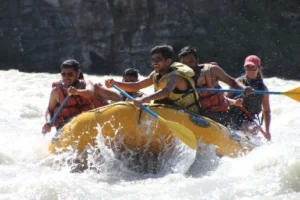
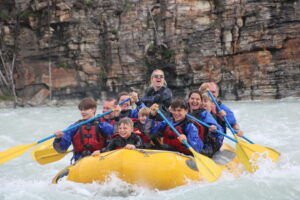
Yes, with the right preparation. Carry Parks Canada-approved bear spray, stay on established trails and roads, and brief children on minimum viewing distances before you go. Avoid Jasper townsite trails early in the elk rut (late August through mid-October) when bulls are aggressive. Joining a guided rafting trip is one of the most family-friendly ways to observe animals from a safe, natural vantage point without surprising them on a trail.