Athabasca Falls in Jasper National Park is one of the most visited natural attractions in the Canadian Rockies, and for good reason. Standing at the railing above the gorge as roughly 113 cubic metres of water per second thunders past you is an experience that stays with you. Plan on spending about 45 to 60 minutes here. The site is well-signed, fully paved to the main viewpoints, free to access once you are inside the national park, and genuinely impressive for visitors of every age. We have been running rafting trips on the Athabasca River since 1971, and we have watched this falls from every angle imaginable. What follows is the most thorough guide to visiting Athabasca Falls that you will find anywhere.
What Makes Athabasca Falls So Powerful
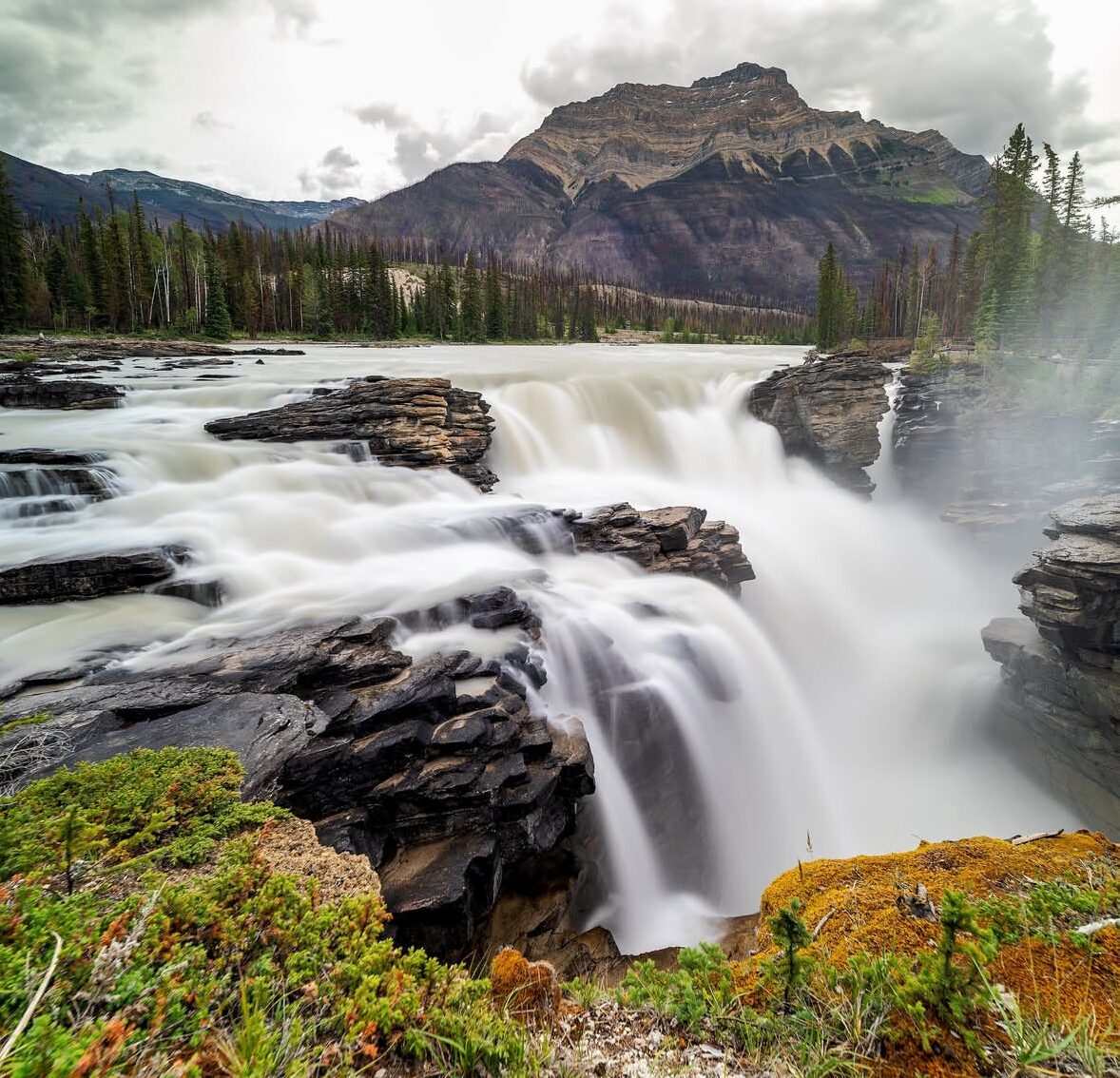
Athabasca Falls is powerful not because of its height, but because of its volume. The falls drop approximately 23 metres (75 feet) over a ledge of ancient, hard quartzite before the river is funnelled into a narrow gorge carved through softer limestone beneath. That quartzite cap is part of the Cathedral Formation, a layer of rock deposited in a shallow Cambrian sea around 505 million years ago. The harder quartzite resists erosion while the limestone below it does not, which is exactly why the gorge is so deep and so narrow.
The average flow rate through Athabasca Falls is approximately 113 cubic metres per second according to the World Waterfall Database, though that figure rises substantially during spring snowmelt. To put that in perspective, imagine a cube of water more than four and a half metres on every side passing that single point every second. During peak spring flow, the roar is audible from the parking lot before you even reach the trail.
The gorge itself was not carved by the falls alone. When the last glaciers receded from this valley at the end of the last ice age, they left behind a landscape that the Athabasca River has been reworking ever since. High-pressure water forces its way into fractures in the rock, a process called hydraulic action, while sediment-laden flows act like sandpaper on the bedrock. Over thousands of years those processes have sculpted the canyon walls, drilled out circular potholes in the rock, and caused the falls to slowly migrate upstream. If you look carefully from the lower trail, you can see old potholes on the canyon walls that now sit metres above the current water line, relics of where the river once flowed.
The falls are 46 metres wide at the crest, and the total height including the cascade into the canyon can reach close to 24 metres depending on the source you consult. What never changes is the impression it leaves on visitors.
Getting to Athabasca Falls: Location, Parking, and Entry Fees
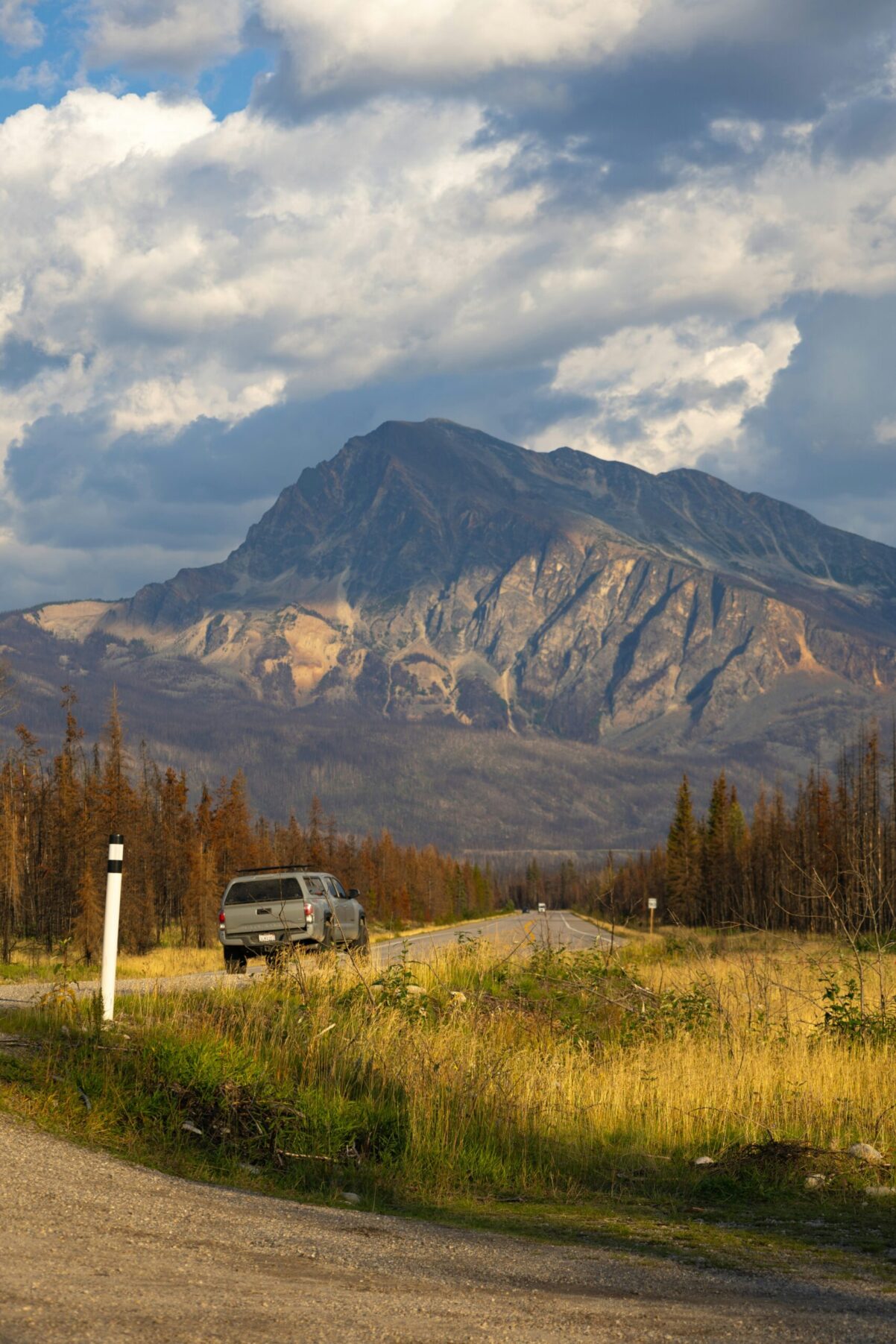
Athabasca Falls sits approximately 30 kilometres south of the Jasper townsite, just west of the Icefields Parkway (Highway 93) at the junction with Highway 93A. The drive from Jasper takes about 25 to 30 minutes in normal conditions. Follow the Icefields Parkway south and watch for the large, well-signed turnoff on the right. You cannot miss it.
The parking lot is paved, large, and free. Two designated accessible parking stalls sit closest to the trailhead. On busy summer weekends the lot fills quickly, especially between 10 a.m. and 4 p.m. when tour buses are most active. If you arrive and the lot is full, you can park along designated pull-outs on Highway 93A and walk a short distance to the entrance. The best strategy, which we tell every guest who asks us about planning a Jasper day, is to arrive before 9 a.m. or after 5 p.m. You get better photos, fewer crowds at the railings, and a noticeably more peaceful experience.
There is no admission fee to Athabasca Falls itself, but you must have a valid Parks Canada pass to be inside Jasper National Park and to travel the Icefields Parkway. A Parks Canada day pass covers the cost and can be purchased online through the Parks Canada website, at the park gate on the way into Jasper, or at the Jasper Visitor Centre in town. If you are planning more than one or two national park visits during your trip, a Discovery Pass (annual pass) is generally the better value. Parks Canada also offers free admission to children age 17 and under when accompanied by a pass holder.
Facilities at the parking area include vault toilets (outhouses) and picnic tables. There is no food vendor on site, so pack your own snacks and water. The picnic area is a pleasant spot for a lunch break, particularly when you combine the falls with a longer Icefields Parkway day.
What to Expect on the Trails: Viewpoints, Surfaces, and the Lower Canyon
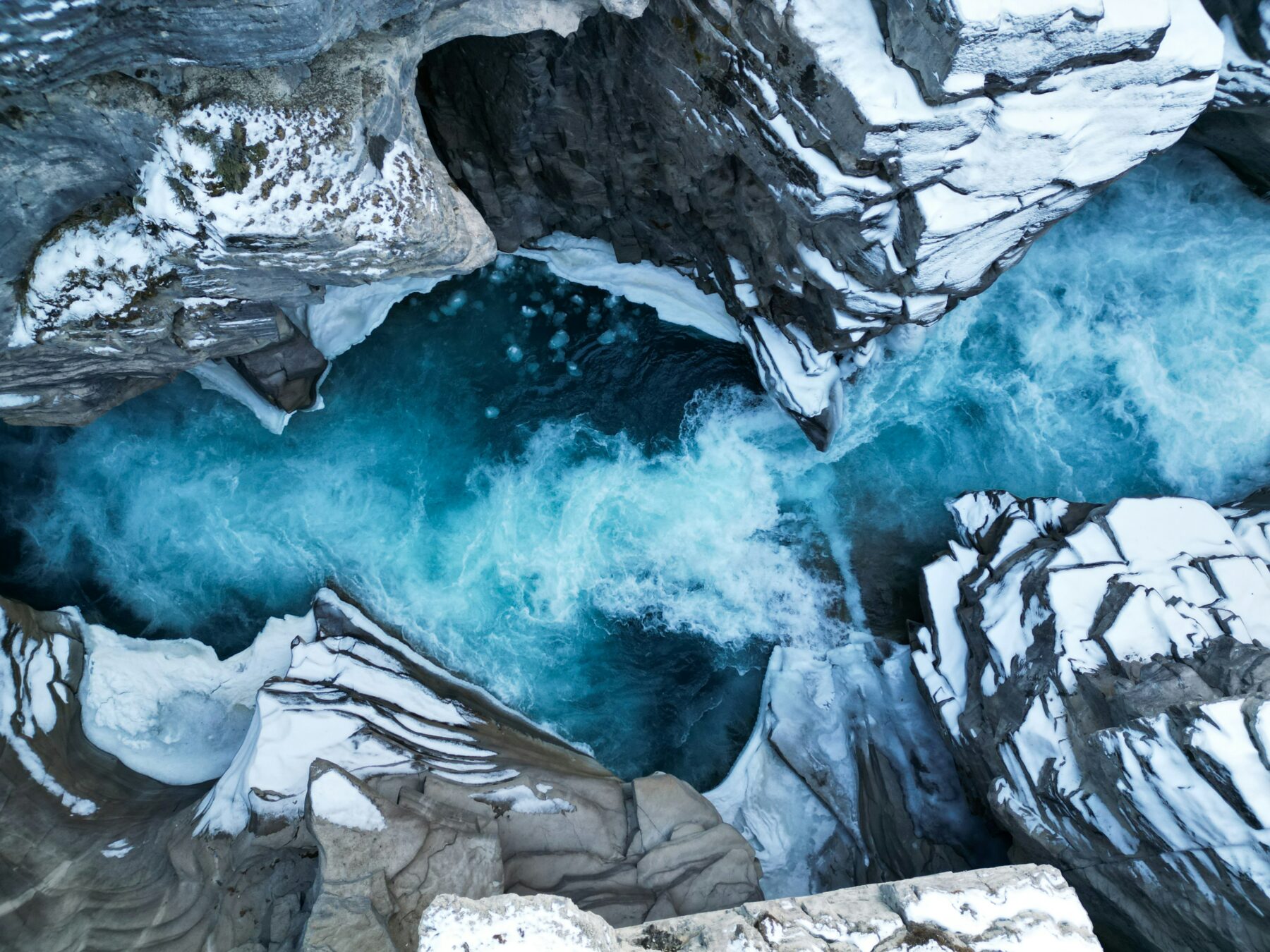
The trail network at Athabasca Falls is compact, well-maintained, and accessible for most visitors. From the parking lot, a short paved path leads you directly to the main viewing area in a matter of minutes. There are two distinct areas to explore: the upper loop and the lower canyon trail.
The upper loop is fully paved, flat, and suitable for strollers and wheelchairs. It takes you along the top of the gorge, past the main viewing platform directly above the falls, and around to a bridge over the river just downstream of the canyon. This is where you get the classic front-on view of the falls and can feel the mist on your face. The railing here is sturdy and appropriate for families with young children, though as with any waterfall site, close adult supervision near the edge is essential. Young children should always hold an adult’s hand near the railings. Plan on this loop taking about 20 to 25 minutes at a comfortable pace with time to stop and look.
The lower canyon trail descends from the upper loop to bring you closer to the gorge walls and the old pothole formations. The surface here is compacted gravel and natural rock in places, with some uneven sections. It is walkable for most people in reasonable physical condition and appropriate footwear, but is not well-suited for standard strollers or wheelchairs. This section adds another 15 to 20 minutes to your visit and offers a completely different perspective: instead of looking down into the gorge, you are looking up at the canyon walls and across at the rushing water. This is where the geology is most visible, and where the eroded potholes on the old rock surfaces tell the story of the river’s journey over thousands of years.
The bridge on the upper loop provides excellent views both upstream toward the falls and downstream along the canyon. On bright days, the turquoise-green colour of the glacially fed water contrasts sharply with the grey rock walls in a way that makes every visitor reach for their phone or camera. That colour comes from glacial flour, fine rock particles ground up by glacial movement that remain suspended in the water and scatter light in the blue-green spectrum.
Best Time of Year to Visit Athabasca Falls
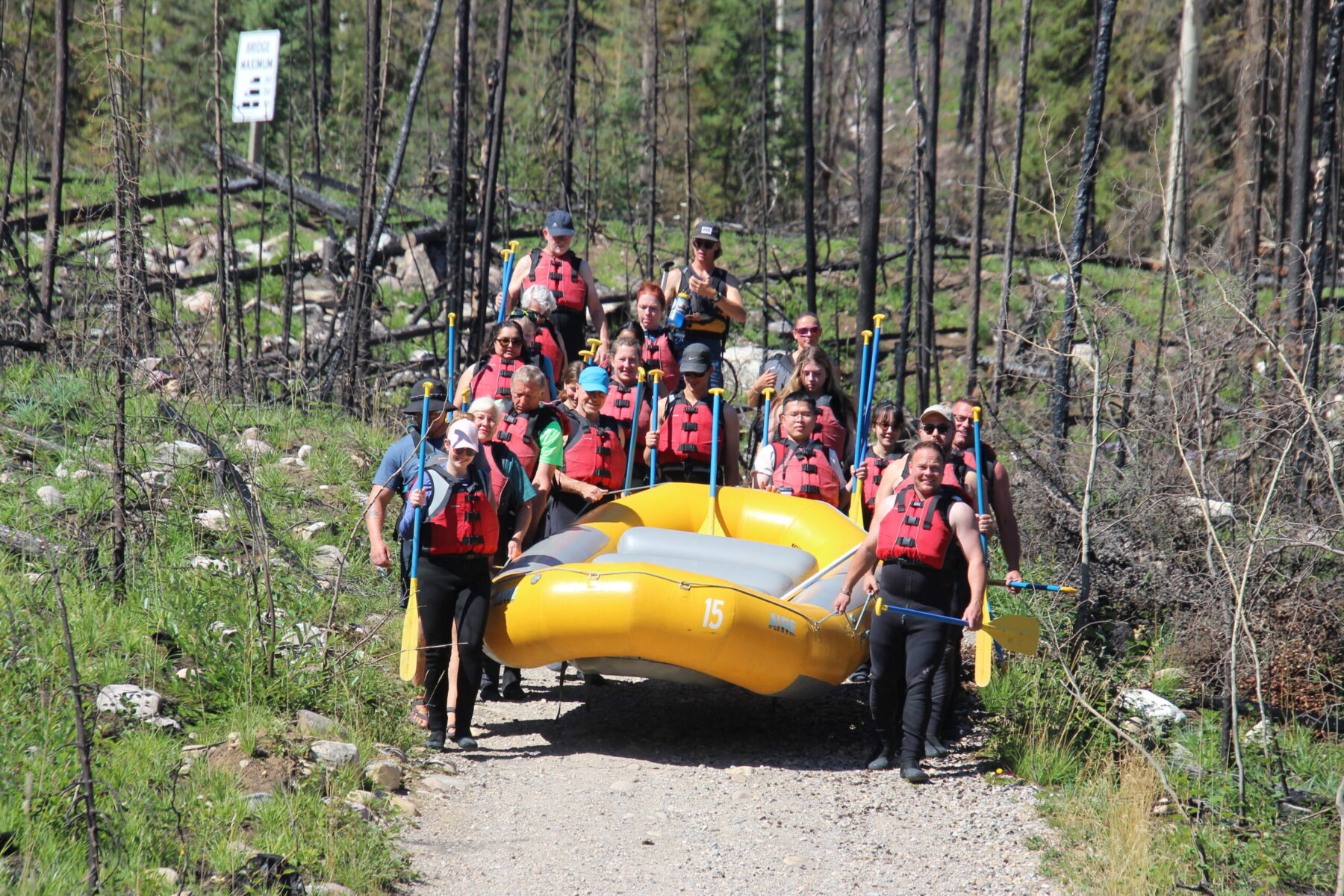
Every season brings a different face to Athabasca Falls, and the right time to visit depends on what you are looking for.
Late May through June is peak flow season. Snowmelt from the surrounding mountains and glacial runoff from the Columbia Icefield push the Athabasca River to its highest volume of the year. The falls are thunderous, mist reaches well beyond the railings, and the raw force of the water is genuinely breathtaking. This is the most dramatic version of Athabasca Falls you can see, but it also means the lower canyon trail can be wet underfoot and the main platform is damp. Dress in a light waterproof layer and expect to get a little wet. Early morning visits in late May and June can also reward you with fog rising from the canyon, which makes for extraordinary photographs.
July and August bring warmer temperatures, drier trails, and easier conditions for families with young children. The falls are still impressive, the glacial melt continues to feed the river, and the overall experience is more comfortable. The trade-off is crowds: this is peak tourist season in Jasper, and the parking lot can reach capacity by mid-morning on weekends. Early morning visits remain the most reliable way to get a peaceful experience in summer.
September and October are arguably the most underrated time to visit. Crowds thin out noticeably after Labour Day, the larch trees in the Jasper area turn golden, temperatures are crisp but pleasant, and the falls are still flowing strongly. Fall light on the canyon walls is particularly beautiful in the late afternoon. If your schedule allows a shoulder-season visit, we strongly recommend it.
Winter brings a dramatic transformation. The falls do not freeze completely because the volume is too great, but ice formations build along the canyon walls and the surrounding landscape is snow-covered and silent. Roads are maintained, but winter driving conditions on the Icefields Parkway require appropriate tires and caution. The lower canyon trail is not recommended in winter conditions due to ice on the rock surfaces.
Family Tips: Visiting Athabasca Falls with Young Children
Athabasca Falls is one of the best family stops in Jasper National Park, and we hear this from guests who visit the falls before or after joining us on the river. Here is what to know before you arrive with kids in tow.
Strollers and the upper loop work well together. The paved surface from the parking lot to the main viewing platform is smooth and manageable for most strollers. A lighter, more maneuverable stroller will navigate the slight inclines more easily than a heavy jogger. The lower canyon trail, with its uneven rock surfaces and steps, is not stroller-appropriate. Leave the stroller at the edge of the upper loop if you want to explore the lower section.
Safety railings are in place at the key viewpoints and along most of the upper trail. The railings are solid and at an adult waist height. For very young children, you will want to keep them in arms or holding hands throughout, particularly at the main platform where the drop to the gorge is immediate and the noise and motion of the falls can be distracting. Parks Canada asks all visitors to stay behind the fences. The rocks beyond the barriers are wet, uneven, and genuinely dangerous.
How long should kids spend here? In our experience, children between about 4 and 12 years old are absolutely fascinated by Athabasca Falls. The combination of noise, mist, colour, and sheer force of the water holds attention in a way that not many natural attractions manage. A full hour here is perfectly reasonable for families. If you have toddlers who need a nap or easily get overwhelmed by crowds, aim for the early morning window before 9 a.m. when the site is at its quietest.
What to bring for kids:
- A light waterproof layer or rain jacket, especially near the main platform in spring and early summer when mist is heavy
- Water and snacks, as there is no food vendor at the site
- Closed-toe shoes with grip, not sandals or flip-flops, for the lower trail
- Sunscreen for summer visits, as open sections of the upper loop have limited shade
- Binoculars if you have them, great for spotting the pothole formations on the far canyon wall
The picnic tables in the parking area are a welcome bonus for families. Eating lunch here before or after a rafting trip is something many of our guests build into their day, and it works beautifully as a pacing break.
Combining Athabasca Falls with a Full Icefields Parkway Day
Athabasca Falls sits at roughly the midpoint of a superb half-day southern loop from Jasper. The most popular combination pairs the falls with a stop at Sunwapta Falls, located about 55 kilometres further south on the Icefields Parkway, and a drive to the Columbia Icefield Discovery Centre. That full loop covers significant ground, so plan for a full day if you want to include all three without feeling rushed.
A more manageable option for families with younger children is to combine Athabasca Falls with a rafting trip on the same morning or afternoon, then spend the second half of the day exploring Jasper townsite. The falls and a half-day rafting adventure together make for a genuinely memorable 24 hours on the Athabasca River corridor. For more ideas on making the most of your time in the park, our guide to Jasper attractions in 2026 covers the full landscape of things to see and do. If you are travelling with children specifically, the 9 best things to do in Jasper with kids is worth bookmarking before your trip. And if the water theme has you curious about more of the park’s stunning scenery, our roundup of beautiful lakes in Jasper you have to see is a great follow-up read.
The Rafting Connection: Same River, Completely Different Experience
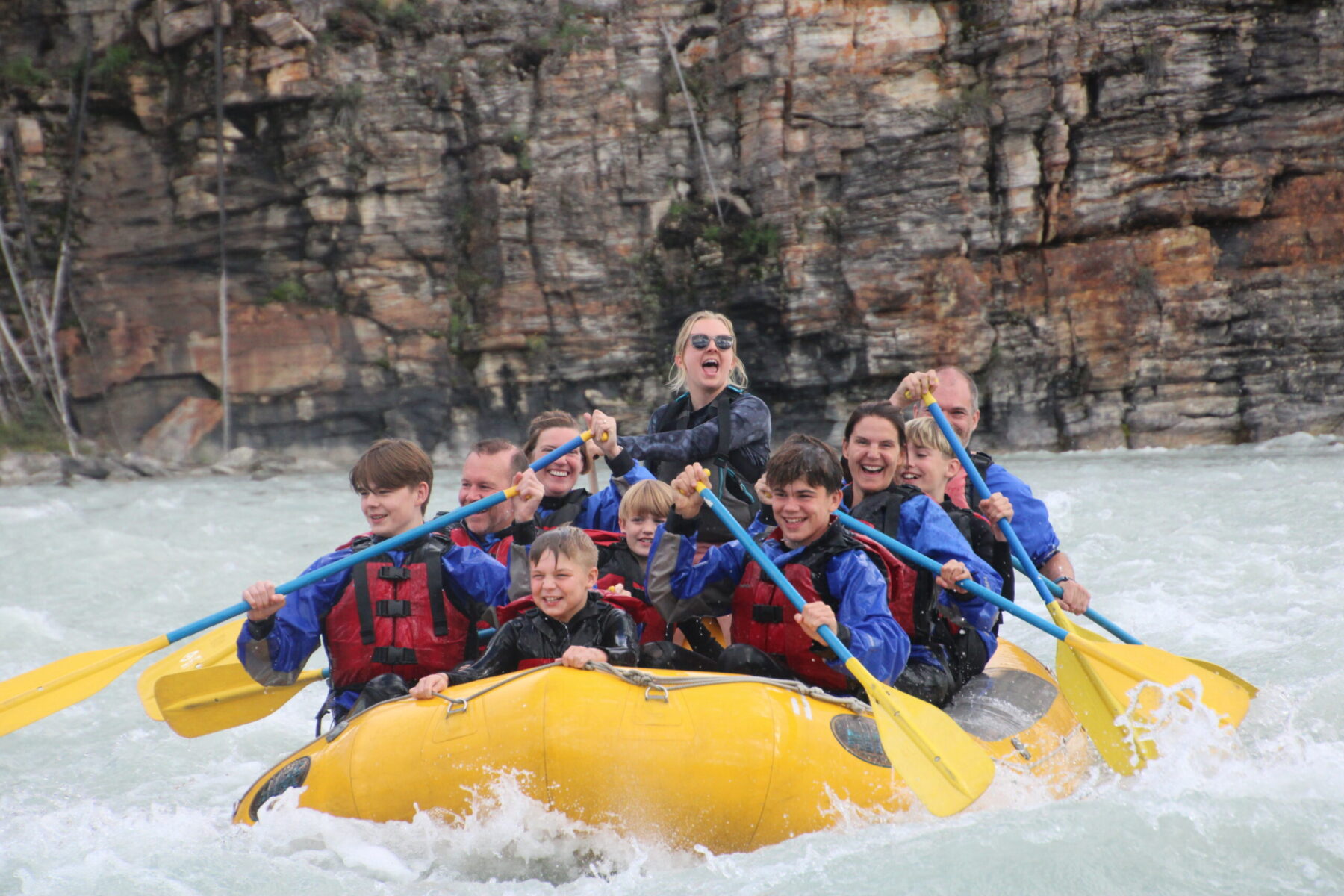
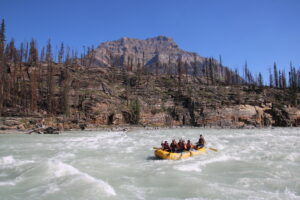
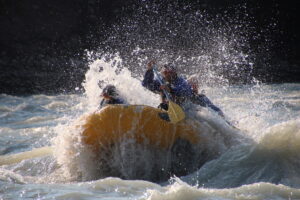
Here is something that surprises a lot of visitors when we tell them: the water you are watching thunder over Athabasca Falls is the same water our rafts are riding a short time later. The Athabasca River continues downstream from the falls through the valley, and that is exactly where our Athabasca Falls rafting trip takes place.
We have been running trips on this river since 1971, which means we know its moods, its rhythms, and its character in a way that no travel guide can replicate. Our guides grew up watching the seasonal changes in this water. When you stand at the viewing platform and look at the gorge the falls have spent thousands of years carving, you are looking at the same geological story that plays out along the rafting section downstream.
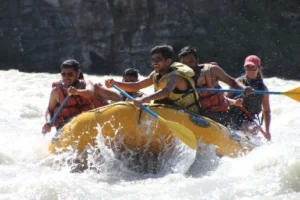
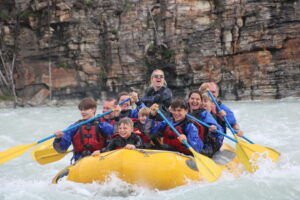
The Athabasca Falls raft trip is a Class II trip that features what we call breathtaking canyon scenery, and that description is not marketing language. The canyon walls that rise around you on the water, the turquoise colour of the glacially fed river, the forested valley on either side, it is a perspective of this landscape that you simply cannot get from a viewing platform. The trip runs approximately three hours door-to-door and is suitable for families, including children who meet the minimum age and weight requirements.
If you are planning to do both the falls viewing and a raft trip on the same day, we suggest visiting the falls first in the morning, then joining us for the afternoon departure. You will appreciate the river from an entirely different vantage point after you have seen the force that drives it. To book or find out more, call us at (780) 852-7238 or visit our Athabasca Falls rafting trip page. You can also book directly through our online booking system.
Frequently Asked Questions About Athabasca Falls
How tall are Athabasca Falls?
Athabasca Falls drops approximately 23 to 24 metres (around 79 feet) over a ledge of hard quartzite before crashing into a narrow limestone gorge. It is not the tallest waterfall in the Canadian Rockies, but it is widely considered the most powerful because of the sheer volume of the Athabasca River flowing over it at any given time.
Is Athabasca Falls free to visit?
There is no admission fee to walk the trails and viewpoints at Athabasca Falls itself, and parking is free. However, you do need a valid Parks Canada pass to enter Jasper National Park and to drive the Icefields Parkway. Day passes are available at park gates and online through Parks Canada. Children 17 and under are free when accompanied by a pass holder.
How long should I spend at Athabasca Falls?
Most visitors spend between 45 minutes and one hour at Athabasca Falls. That gives you enough time to walk the upper paved loop, visit the main viewing platform, explore the lower canyon path, and enjoy the picnic area. Families with young children who want to linger at the railings should allow a full hour to keep the experience relaxed rather than rushed.
When is the best time of year to visit Athabasca Falls?
Late May through June is the peak flow period, when snowmelt and glacial runoff push the Athabasca River to its highest volume and the falls are at their most dramatic. Summer (July and August) offers warmer temperatures, drier trails, and better accessibility for families, while the flow remains impressive. Fall brings fewer crowds and stunning golden colour on the surrounding hillsides.
Is Athabasca Falls accessible with a stroller or wheelchair?
Yes, the main trail from the parking lot to the primary viewpoint is paved and suitable for strollers and most mobility aids. Parks Canada designates two accessible parking stalls in the main lot. The lower canyon trail involves uneven terrain and is not fully accessible, but the primary upper loop provides excellent views of both the falls and the gorge for all visitors.